Keeping Receipts and Serial Records for Secondhand Sporting Equipment
Used shotguns, rifles, and handguns are often received with more unknowns than are realized. The receipt may be vague, the serial number copied incorrectly, or the box of extras separated from the paperwork. Recording these transactions can help identify problems before they become major issues. The means to record these transactions is usually already at hand and the intent is not to create a plethora of documents but a means to identify what was received, when and where it was received, and have this information available when needed to record maintenance, for insurance purposes, for sale of the firearm, etc.
Start by reconciling the item with the receipt
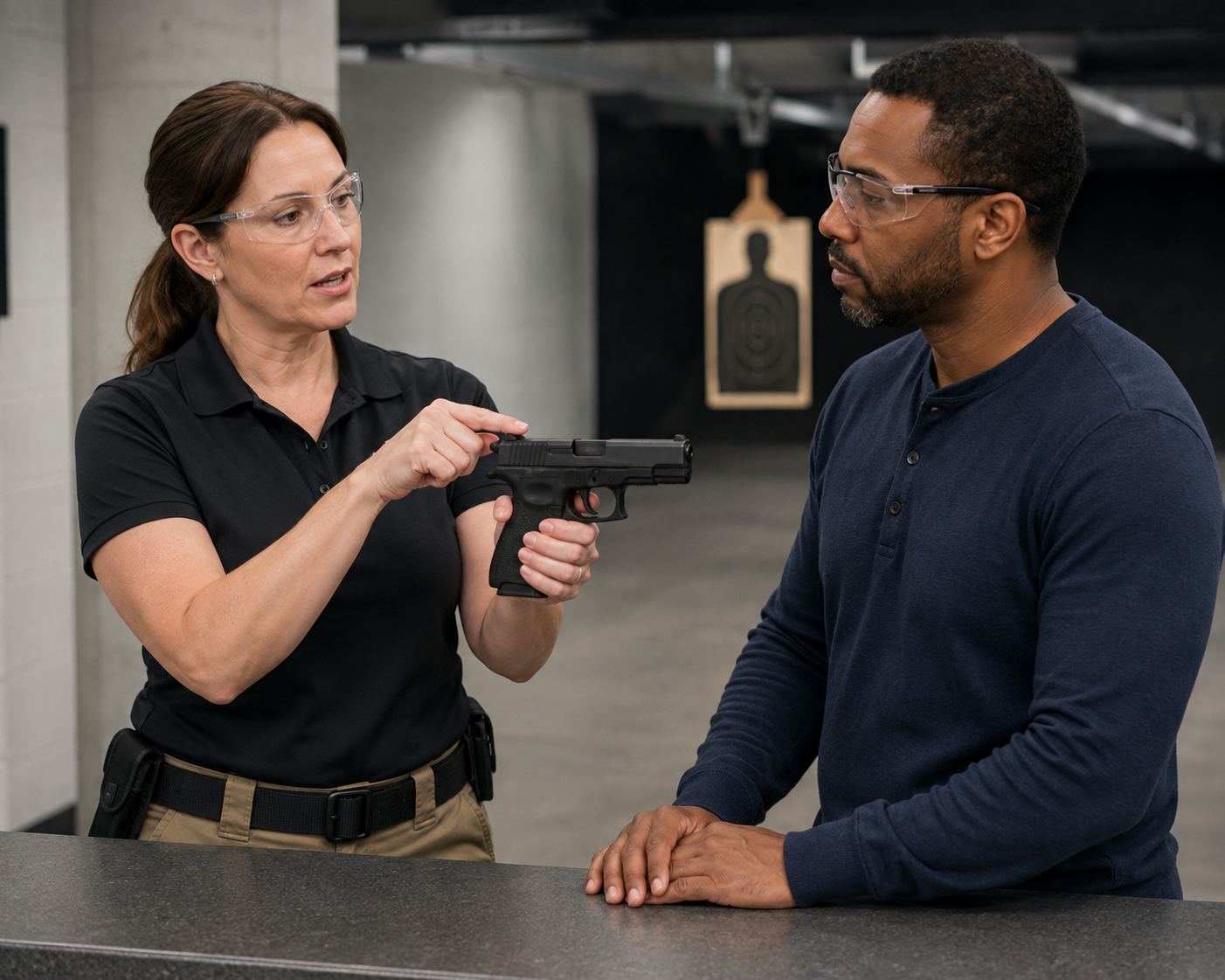
In addition to storing your used firearms safely, make sure you have all of the documents related to the firearms you've purchased. For each firearm, compare the receipts, sales tickets, etc. with the actual firearm to ensure that all of the parts (accessories, ammunition, targets, etc.) are there and that all of the paperwork is complete and accurate. Compare the serial number on the receipt with the serial number on the actual firearm. If they don't match, record the discrepancy and ask the seller or your gunsmith to investigate further. Never alter a serial number!
Compare the number on the gun to the number on the receipt, etc. Copy the number exactly, including any letters, hyphens, etc., and any prefix or suffix to the number. If a number appears to be damaged or incomplete, record that there is a discrepancy and ask the seller for an explanation. If the number is incomplete due to wear, etc., do not attempt to complete the number. Do not alter, polish, scrape, etc. a serial number marking in any way.
Non-firearm sporting equipment (e.g. scopes, cases, range finds, ballpoint pens, bits and pieces of other stuff) should be recorded in the same sort of detail as the sporting equipment itself, i.e. not just as 'used gear'. The record should accurately describe the item(s) and how they were acquired.
Make the purchase record specific enough to use
Even the simplest purchase receipt contains enough information to fill out a serial record. A receipt for a used purchase usually contains the date of the purchase, name and address of the seller, description of the item(s) purchased, model # and/or serial # of the item(s), and the total cost for all of the items. It should also state if some of the items were traded in, or if some of the items were purchased on consignment.
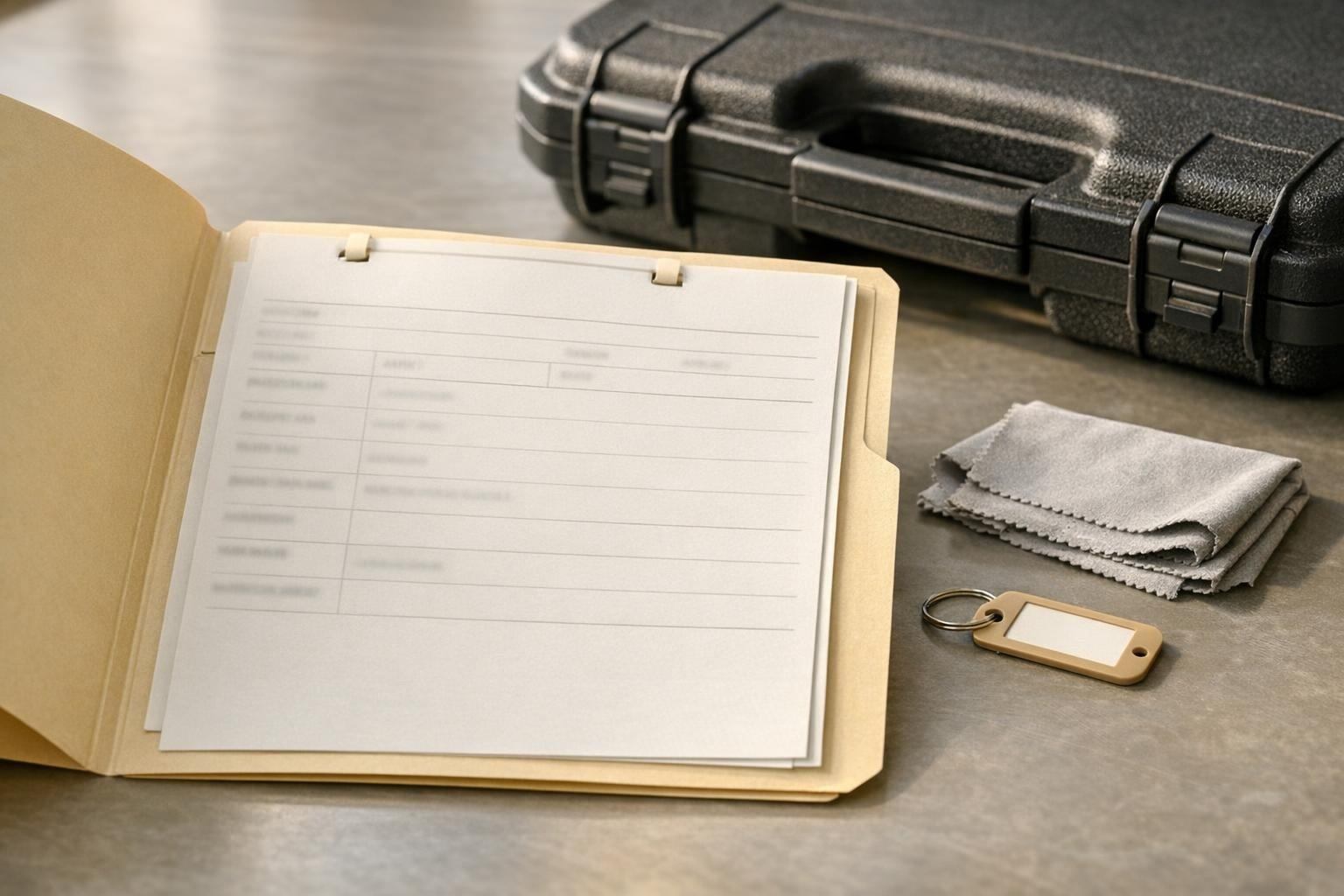
The receipts for the used guns can be in the form of printed receipts, emailed receipt, etc. It is best to keep the original receipt as well as a scanned copy in a file that can be read by any computer in the future. Although a picture of a receipt is better than nothing, it is not recommended because the text may not read well. If any information is missing from the receipt, it is best to ask the seller for a revised copy or for more information to complete the description of the gun.
Just because a store receipt has been kept does not mean all the legal requirements for a purchase have been fulfilled. Laws for transfers of firearms, waiting periods, required reports and access to fire-arm purchase records vary from state to province and even from municipality to municipality and can change at any time. Check with the official authority in the relevant state, province or municipality for current requirements for proof of all legal requirements for a fire-arm purchase.
Keep a private record without creating unnecessary exposure
The safest document is one which is easy to find and to protect. A locked folder with a simple paper receipt is far safer than an online account with sensitive documents. Storing copies of a digital receipt online and also on a physical CD or external drive is therefore highly recommended.
Limit your documenting to only the information that will be useful to you. A good record for a gun would include make, model, serial number, date of purchase, name of seller, and copy of the receipt. Don't feel obligated to document every firearm in your home, where you traveled, what your alarms for, etc. Also, be sure to review the privacy and security settings for any cloud storage that you use to store sensitive documents.
Don't store your serial records in the same location as the firearm. That way, even if someone gains access to your home or storage location, all that they will find are notes to help you locate the serial records, i.e. the location where you have stored the actual firearm. This is particularly relevant for safety reasons in relation to storing fireworks, for example.
Let maintenance notes answer ordinary questions
By keeping a record of maintenance performed, such as parts replaced or inspection performed, you will have reference material to answer typical questions about the sporting equipment such as when was last inspection performed or did a loose sight, cracked stock or other problems with shooting occur prior to or after a trip to the range.
This is also how to keep track of the typical questions you have for your sporting equipment. For example, how long ago was that item inspected? Was that damaged case for this firearm ever replaced? Did that loose sight, cracked stock or malfunctioning feeding system already occur before that round trip to the range for this model of used sporting goods?
Manuals, Warranty Cards, Safety Booklets, and parts instruction guides should be kept with the record. If you have misplaced the manual for a particular gun, try to locate current documentation from the manufacturer's website or official print publication. Maintenance records do not ensure that a firearm is safe to shoot; it is important to inspect a firearm for safety defects prior to use.
Prepare for resale, insurance, or a transfer
Remember that good paperwork will save so much time in the future, especially when a change of circumstances arises and you are required to describe the item in question. Proof of ownership of secondhand firearms etc. must clearly describe the item in question and ideally contain the identifying marks of the item. However, the serial number of a firearm must NOT be published on the internet or otherwise distributed to complete strangers, even in a public advertisement. Such information must only be distributed to people with a legitimate need to know or as part of a transaction or process conducted by established professionals.
Incorporate your pawn shop transaction documentation into your sporting equipment records. This documentation will typically include a better description of the sporting equipment that you purchased at the pawn shop than you would have written in a later personal note. Incorporate all documentation that was generated by your pawn shop transaction, including your ticket, the transactional documentation that you received when you redeemed your sporting equipment item, and all receipts, etc.
Check with your insurer for the specific documentation they require before a loss occurs. This could include receipts, appraisals, photographs of the item and a detailed inventory of all equipment in your home. Store the copies of the documentation for your secondhand purchase in a safe place to ensure that in the event of a loss (such as theft, fire or movement of the item) you will have all of the necessary information to assist with your claim.
The key is to develop a system that works for you and maintain it. Having identified the necessary marks on your item(s) the first time, recording all transactions related to those items and adding minor service notes from time to time, will result in a very accurate and useful store of information regarding all of your firearms.